
POS systems that stay up at every location, not just most of them.
Whether you're running a single location, a few stores, or a growing multi-location business, a point-of-sale outage isn't an inconvenience, it's lost sales the moment it happens. We build and support the network and infrastructure behind your POS so every site runs the same reliable setup, and so an outage gets caught and fixed before a customer ever notices.
Reliable, redundant connectivity at every site
A POS terminal is only as good as the connection behind it. We design each location's internet and network setup with redundancy in mind, so that a single circuit dropping, a switch hiccup, or an access point failing doesn't take checkout offline. For businesses where a POS outage means a line of customers who can't pay, that redundancy is the difference between a non-event and a bad afternoon.
The same setup, every location
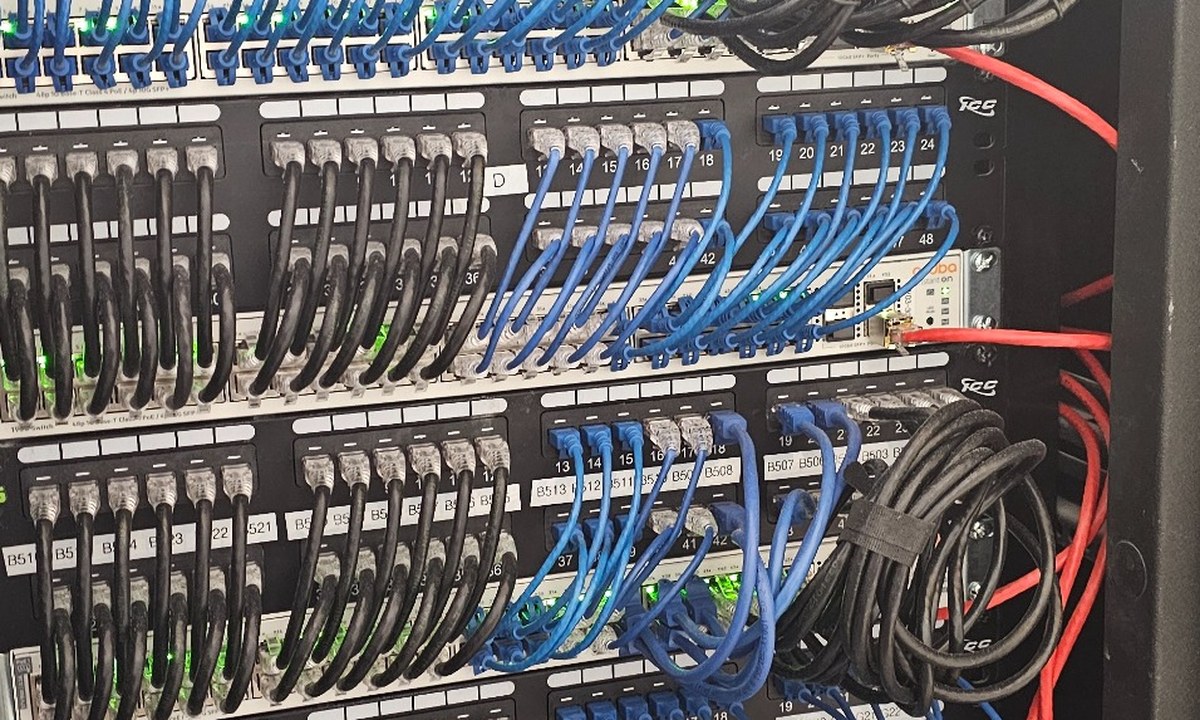
One of the biggest hidden costs in multi-location retail is inconsistency, one store on one router, another on a different switch brand, a third with a config nobody wrote down. When something breaks, nobody can say for sure what "normal" even looks like at that site. We standardize hardware and network configuration across every location so each one is built the same way, documented the same way, and supportable the same way, whether it's the flagship store or the newest location that opened last month.
Centralized monitoring that catches problems before they cost you sales
With every location's network and POS-supporting infrastructure monitored from one place, we see a connectivity drop, a device going offline, or unusual behavior as it happens, not after a manager calls to say registers are down. That means outages get caught and addressed fast, often before a location has even noticed a problem, and always before it turns into a lost sale or an angry line of customers.
PCI-relevant network segmentation for POS traffic
Payment card data has no business sharing a network with guest wifi or a back-office workstation. We segment POS traffic onto its own isolated network at each location, so a compromised guest device or an infected laptop can't reach the systems processing payments. This isn't cosmetic, it's proper segmentation enforced at the network layer, the same principle behind the segmentation failure we found and fixed for a multi-location retail client, detailed in our Wi-Fi segmentation case study.
Scaling without starting over
Adding a new location shouldn't mean re-inventing your IT setup from scratch. Because every site follows the same standardized build, bringing a new location online is a matter of repeating a known-good process, not a one-off project each time. As you grow from one location to a few, and from a few to many, your IT support scales with you instead of becoming harder to manage with every new address.
Keep reading.
Find out where your setup is exposed.
We'll review your current network across your locations and tell you honestly where the risks are, before an outage or a security gap costs you a sale.