
Building a Restaurant's Entire Technology Backbone From the Studs Up
A brand-new restaurant build-out, structured cabling, POS network, cameras, access control, zoned audio, phones, and guest Wi-Fi, all designed and installed before the drywall went up.
Most of our networking work is fixing what's already there, untangling years of patchwork. This project was the opposite: a brand-new restaurant, still steel studs and open ceiling, where we got to design and build the entire technology infrastructure from scratch. When you're involved this early, every cable run gets planned instead of improvised, and every system gets its own properly labeled home in the rack.
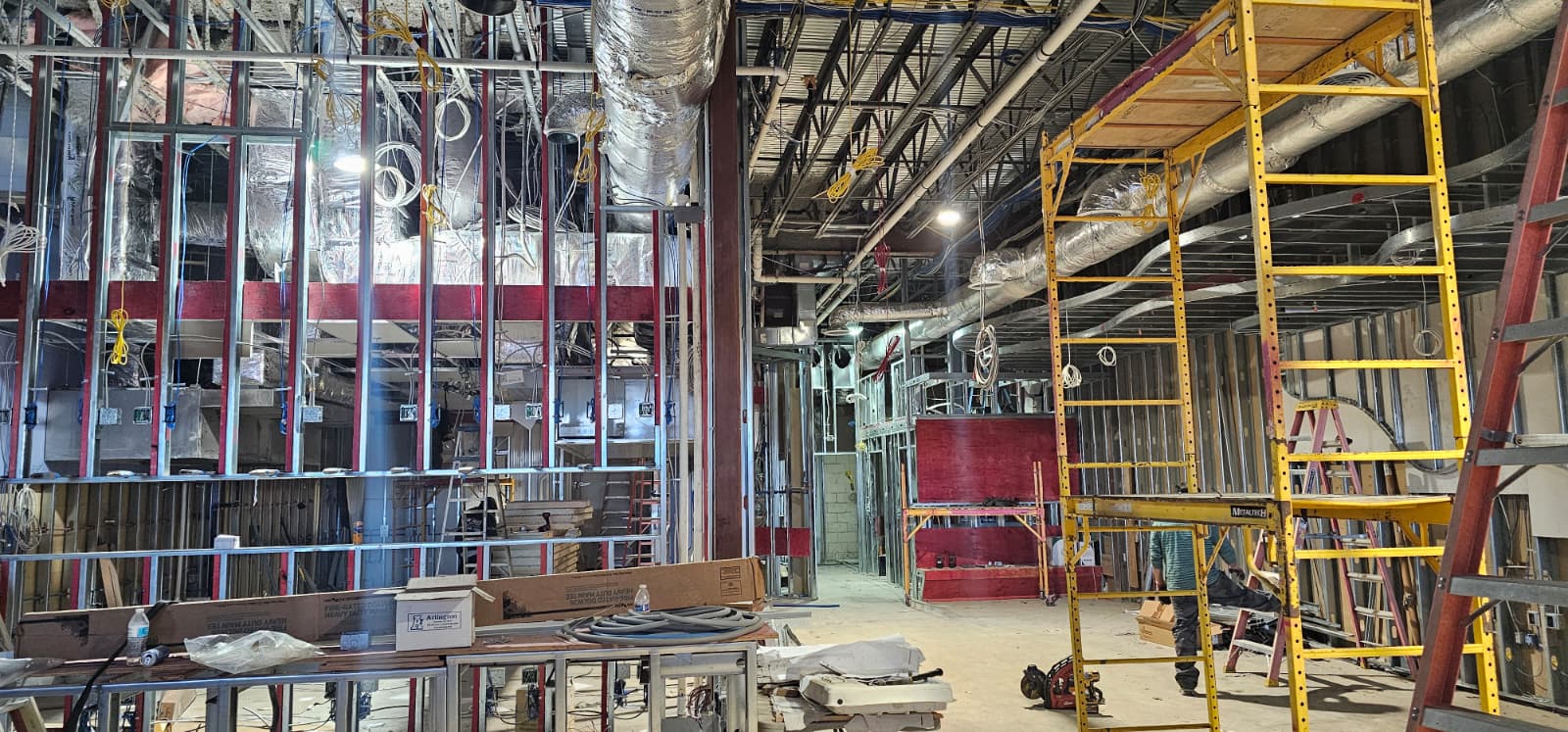
Everything runs before the walls close
The single biggest advantage of wiring during construction: the cabling goes exactly where it needs to go, cleanly, with no compromises. We ran structured cabling throughout the space while the framing was open, drops for the point-of-sale stations, kitchen displays, cameras, access control, speakers, phones, and wireless access points, all home-running back to a central rack location.
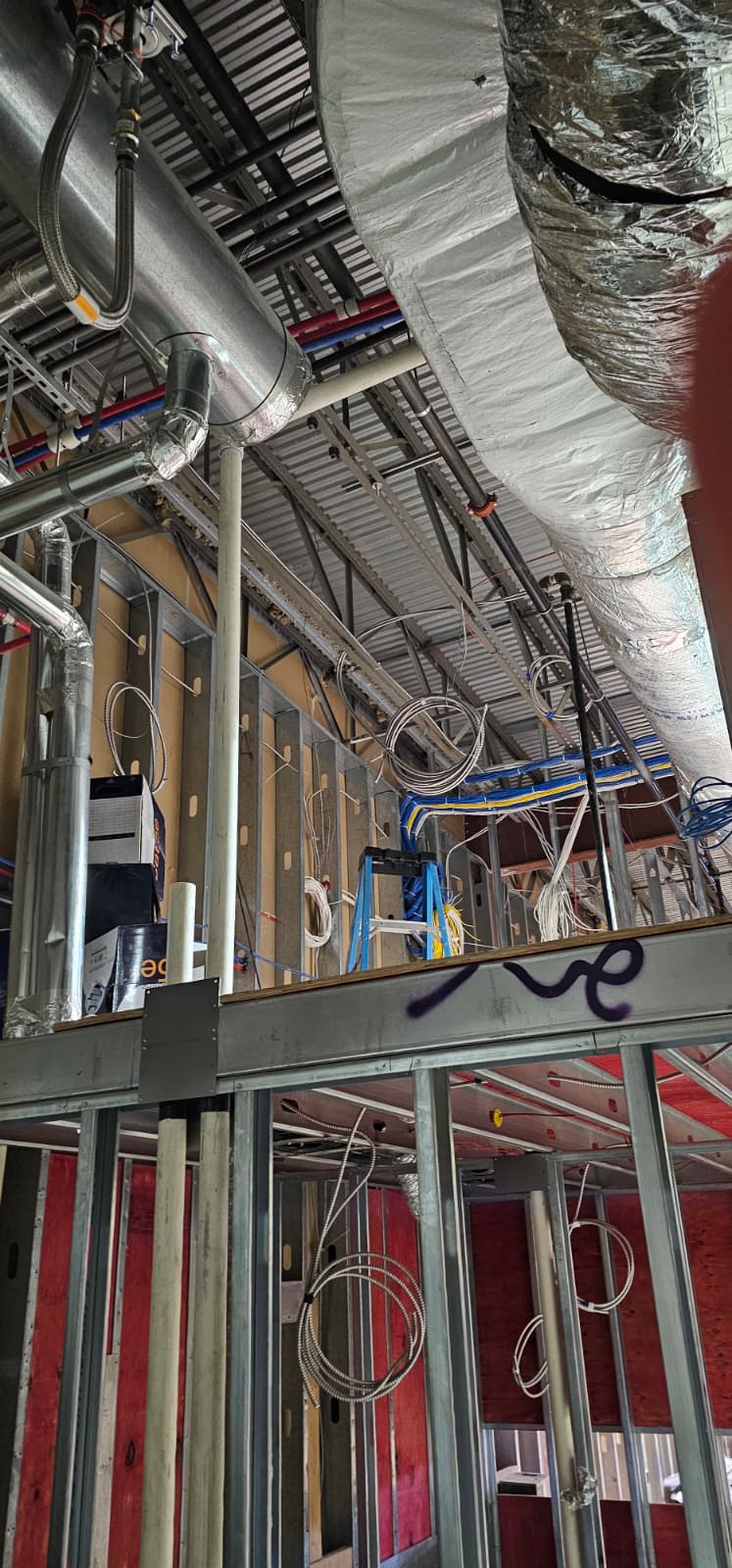
Every bundle was routed, supported, and organized before a single piece of drywall went up. Doing this after construction means fishing walls, cutting ceiling tiles, and settling for "close enough" locations. Doing it during construction means the infrastructure is invisible and exactly right.
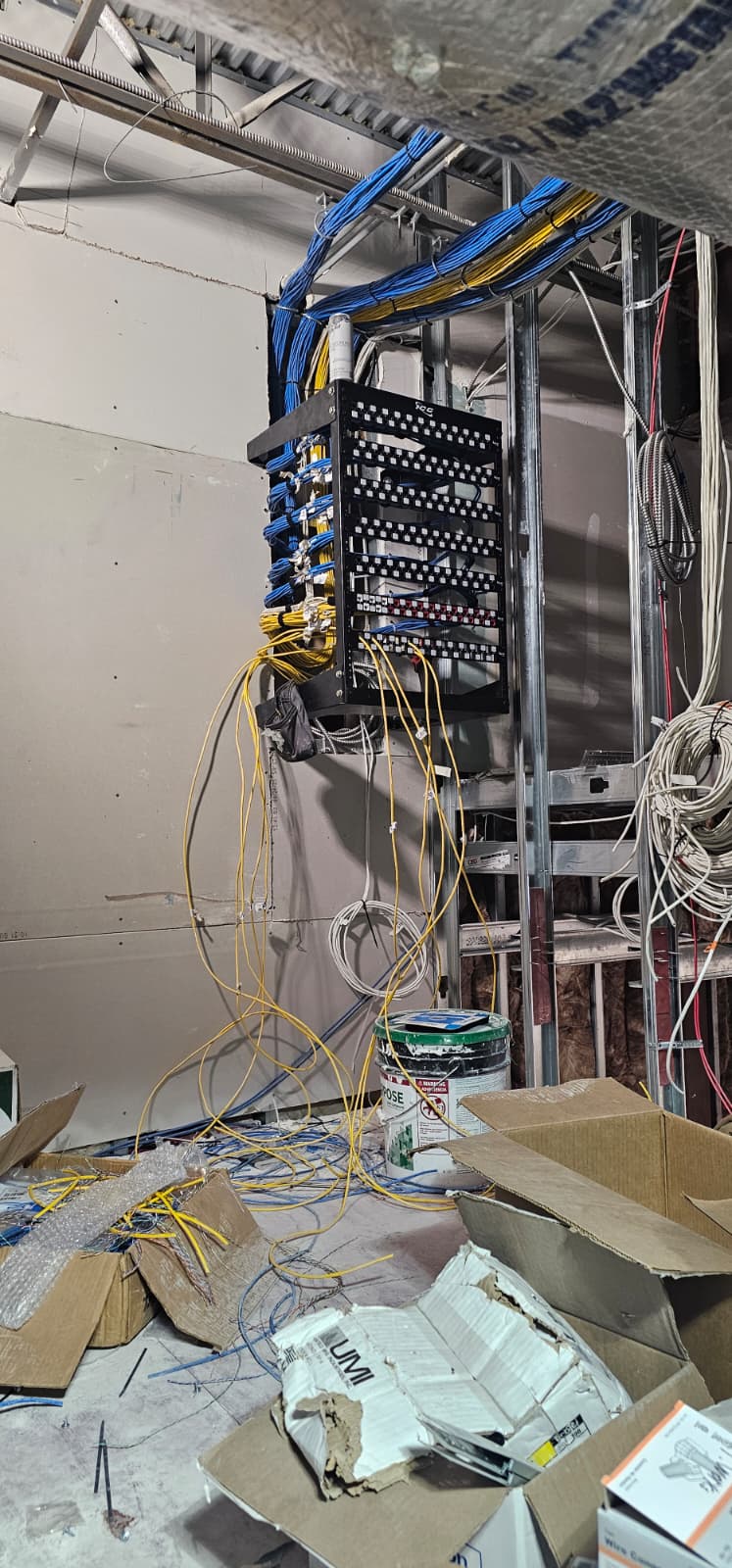
One rack, every system, all labeled
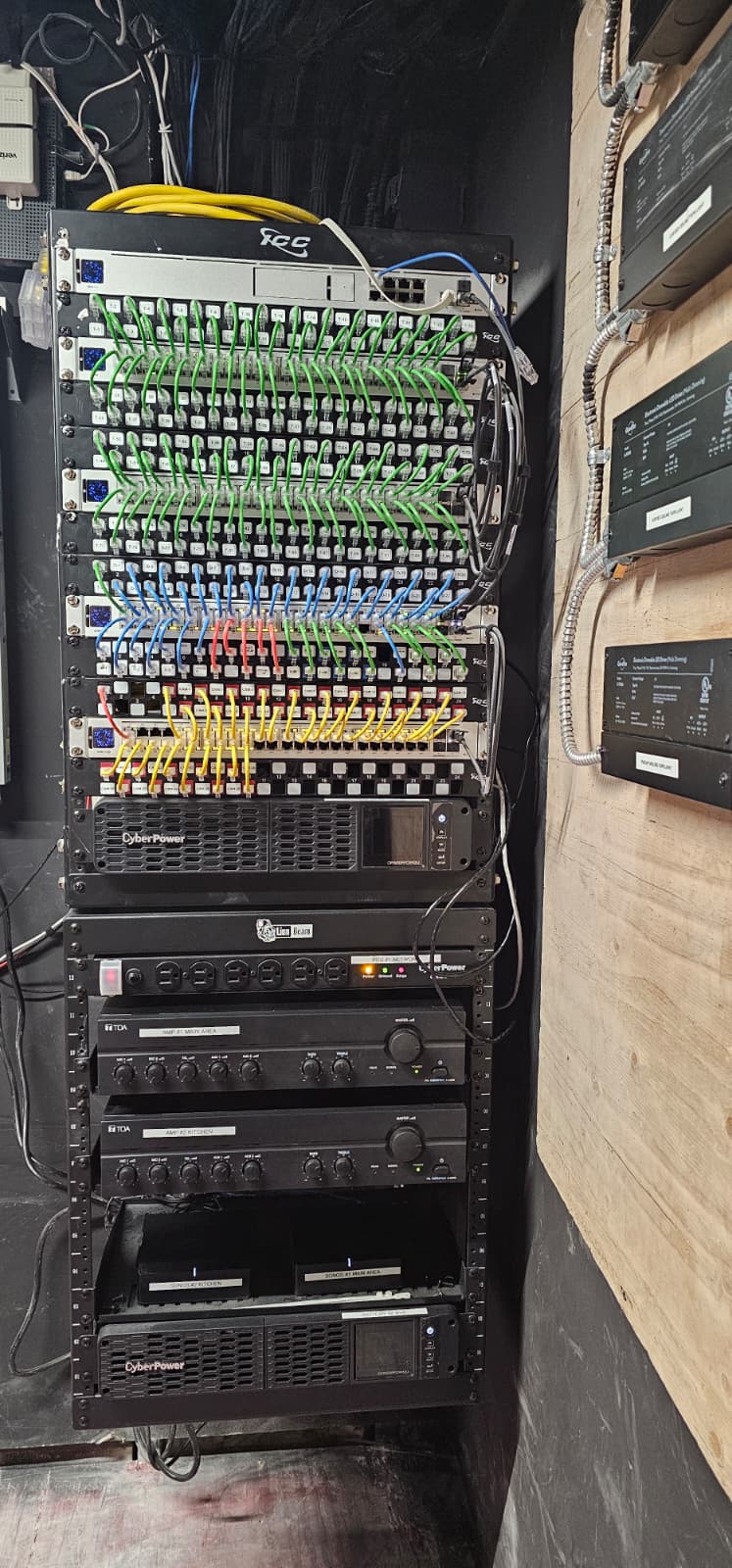
Every cable in the building terminates at patch panels in a wall-mounted rack, and every port is labeled and color-coded by system. Camera ports, POS drops, phone lines, wireless access points, and general data each have their own identity in the rack. Six months from now, nobody has to guess what feeds what.
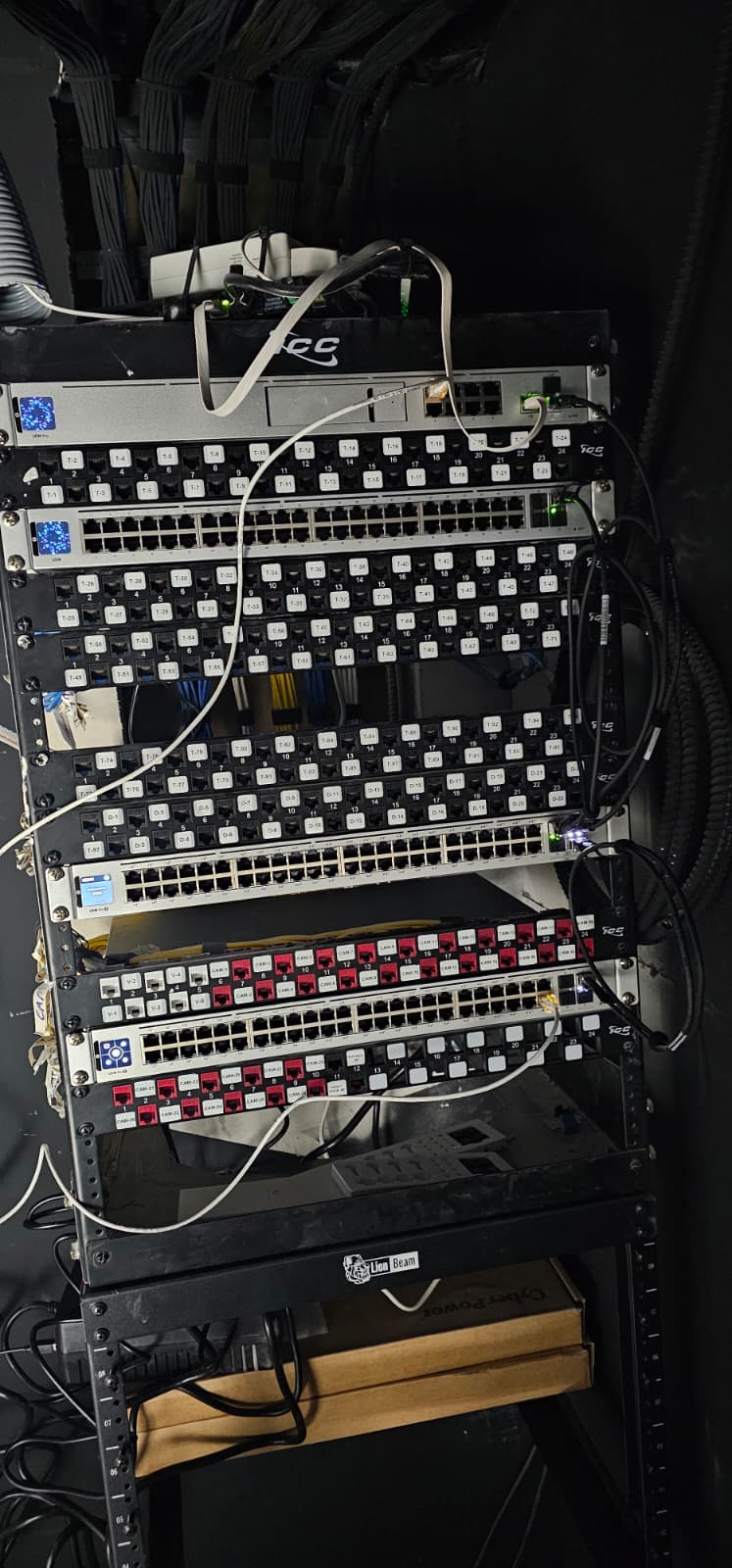
Six months from now, nobody has to guess what feeds what.
Separate networks for separate jobs
A restaurant runs several very different kinds of traffic, and they shouldn't share a network. The Toast POS system needs rock-solid, isolated connectivity, a payment terminal should never compete with a guest streaming video. So the network is segmented into VLANs: POS on its own network, cameras and access control on another, staff devices and phones on their own, and guest Wi-Fi fully isolated from everything the business runs on. If any one segment has a problem, the others don't feel it, and a guest on the Wi-Fi has no path to the payment systems.
The finished backbone
The completed rack carries the whole building: managed switches feeding color-coded patch panels, zoned audio amplifiers for the main dining area and kitchen, streaming audio equipment, and dual battery backup units with managed power distribution, so the POS, cameras, and phones ride through a power blip without a hiccup.
When the restaurant opens its doors, the technology will simply work, and none of it will be visible except a camera here and a speaker there. That's the goal of infrastructure done right: the owner thinks about food and guests, not about why the card reader dropped offline during Friday dinner service.
Opening a new location or planning a build-out? The earlier we're involved, the better the result, structured cabling and networking, security cameras, access control, and phones and communication all benefit from being designed in, not bolted on.