
A few seconds of bad power can corrupt data, crash a server, or fry a switch. We design battery backup and surge protection that keeps Central New Jersey businesses running through the outages that knock everyone else offline.
A flicker that lasts less than a second can be enough to crash a server mid-write or corrupt an open database file. Without conditioned, battery-backed power, every brief sag or surge is a chance for something important to break silently.
If a brief outage means an immediate, hard shutdown of every server, switch, and access point in the building, a two-minute utility blip turns into an hour of reboots, file checks, and lost productivity for the whole office.
A nearby lightning strike, a utility switching event, or even a large piece of equipment cycling on can send a damaging spike through your electrical system. Without surge protection at the right points, that spike finds your most expensive hardware first.
A UPS or generator that was installed years ago and never tested is a liability, not a safeguard. Batteries degrade on a predictable schedule, if no one's tracking that, the device fails silently right when you need it most.
Even with battery backup, servers that don't shut down cleanly when the battery runs low can suffer file system corruption and failed services on restart. Without automated shutdown scripting, that backup time is wasted.
Multi-day outages happen, storms, grid issues, construction accidents. Without a plan that covers generator coordination or extended runtime, a longer outage means a full shutdown of operations with no good fallback.
Most businesses think about power protection once, at installation, and never again. We treat it as ongoing infrastructure. That starts with proper sizing: every CyberPower UPS we deploy is matched to the actual load it needs to carry, with enough runtime to either ride out a short outage or shut down cleanly. A UPS that's undersized for the load it's protecting gives you a false sense of security and fails exactly when you need it.
Placement matters as much as capacity. Servers, core switches, firewalls, and any access control or phone equipment that needs to stay up get prioritized circuits. We also install surge protection at the panel level, not just at the outlet, so a damaging spike is absorbed before it ever reaches your equipment, whether it comes through the electrical service or, less obviously, through a network or phone line.
Battery backup is only useful if the systems behind it shut down correctly. We configure automated graceful shutdown scripting so that when a UPS hits a defined battery threshold, servers and critical systems close out their processes and power down cleanly instead of just going dark. That single piece of configuration is the difference between a clean recovery and a morning spent running file system checks.
For larger sites across Ocean & Monmouth County and the broader New Jersey market, we coordinate generator integration and transfer switch setups so a UPS bridges the gap until a generator picks up the load. And because batteries degrade over time, every UPS we install goes on a testing and replacement schedule, so the equipment that's supposed to save you in an emergency is actually ready when the emergency happens.
It depends on the size of the battery and how much load it's carrying. A UPS protecting a single server rack might provide 15-30 minutes of runtime, enough to ride out most brief outages or shut down cleanly. Larger battery banks or units paired with a generator can extend that significantly. We size every installation around your actual equipment load and your tolerance for downtime, not a generic estimate.
Yes, and this is the part most providers skip. UPS batteries have a predictable lifespan, typically 3-5 years depending on the unit and usage. We track battery age across every device we install, run periodic load and runtime tests, and proactively schedule battery replacement before it becomes a failure, similar to how our free warranty & end-of-life calculator tracks aging hardware. An unmaintained UPS is one more piece of equipment that looks fine until it isn't.
A UPS provides instant, battery-based power the moment utility power drops, there's no gap, which is critical for sensitive electronics like servers and networking gear. A generator takes time to start and come online, typically seconds to a couple of minutes, and is meant for longer outages. The two work together: the UPS bridges the immediate gap and protects against the brief blips a generator can't react to fast enough, while the generator sustains power for hours or days if needed.
A quality UPS with built-in surge suppression provides meaningful protection against the power spikes that follow a nearby strike, but a direct or very close lightning strike can exceed what any single device can absorb. That's why we layer protection, panel-level surge protection, UPS units with surge suppression, and in some cases dedicated surge protection on network and phone lines, so no single point of entry is left exposed.
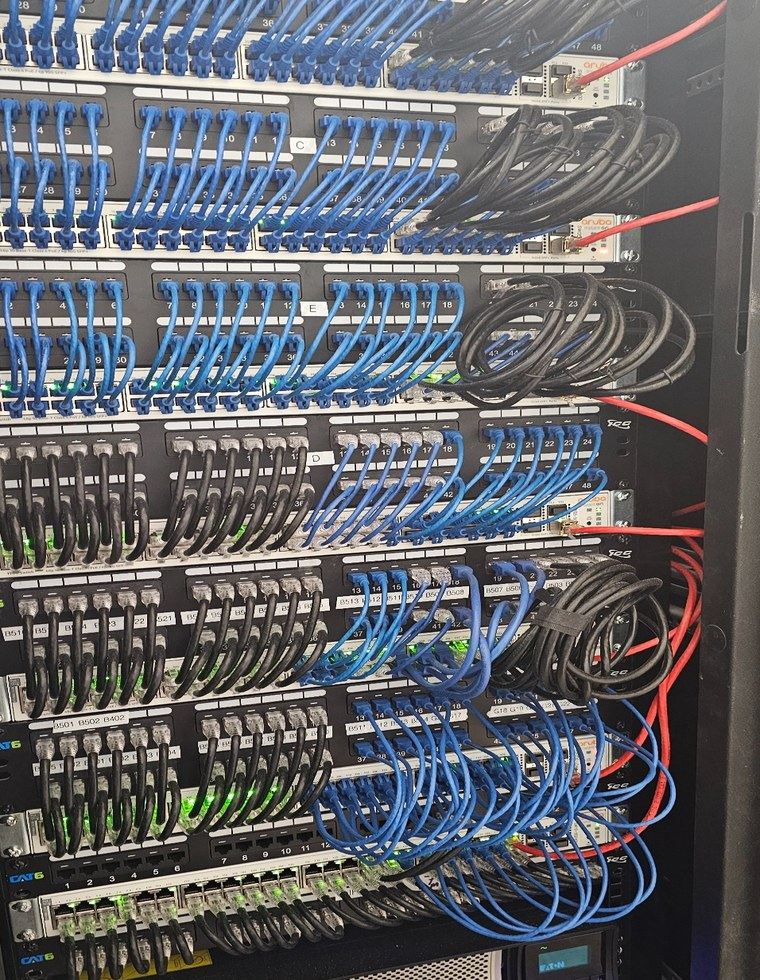
We'll assess your current power protection, or lack of it, and tell you exactly what your servers and network gear need to stay running.