
Case Study: Taking an Apartment Complex from 8 Old Cameras to 4K
This property had two problems at once: an aging 8-camera analog system that had outlived its usefulness, and a management office wiring closet nobody wanted to touch. We fixed both.
Where we started
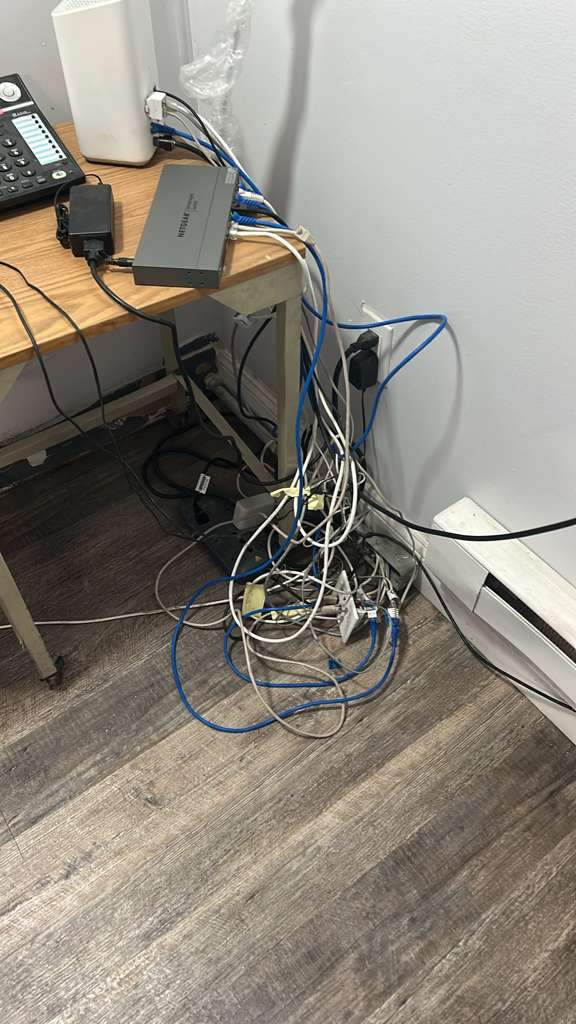
The complex was running an aging eight-camera analog system over old coaxial cabling. The low-resolution footage was technically "recorded" but nearly useless the moment you actually needed to zoom in on a face or a license plate. On top of that, the management office networking setup had been patched together for years: cables piled on the floor, a tangle of cords behind the desk, and nobody fully sure what was connected to what.
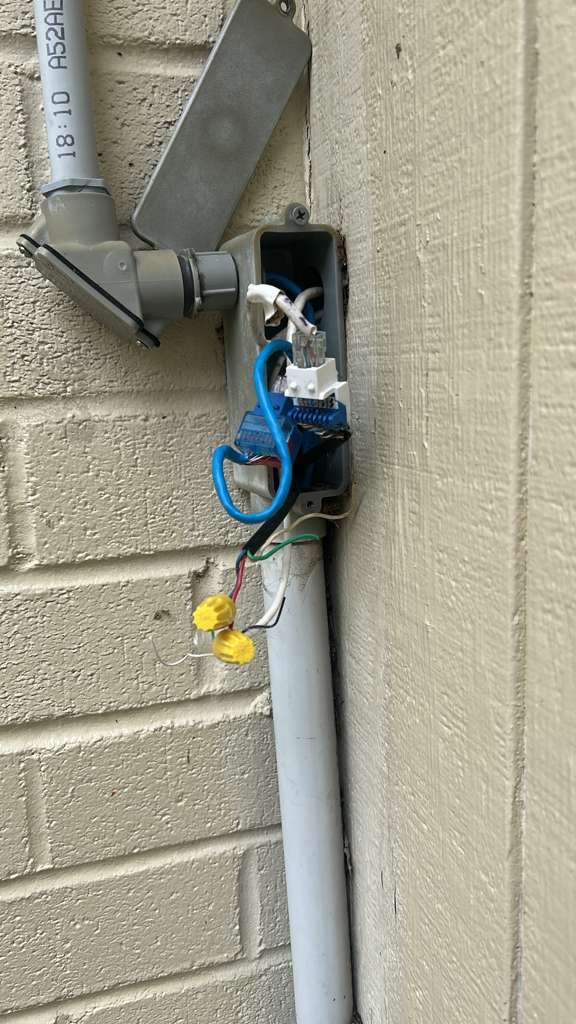
Outside, the camera wiring told the same story. Junction boxes with exposed, half-finished splices, weatherproofing that had given up years ago, and cabling that had been added to and rerouted so many times that tracing any single line back to its camera was a guessing game.
The upgrade
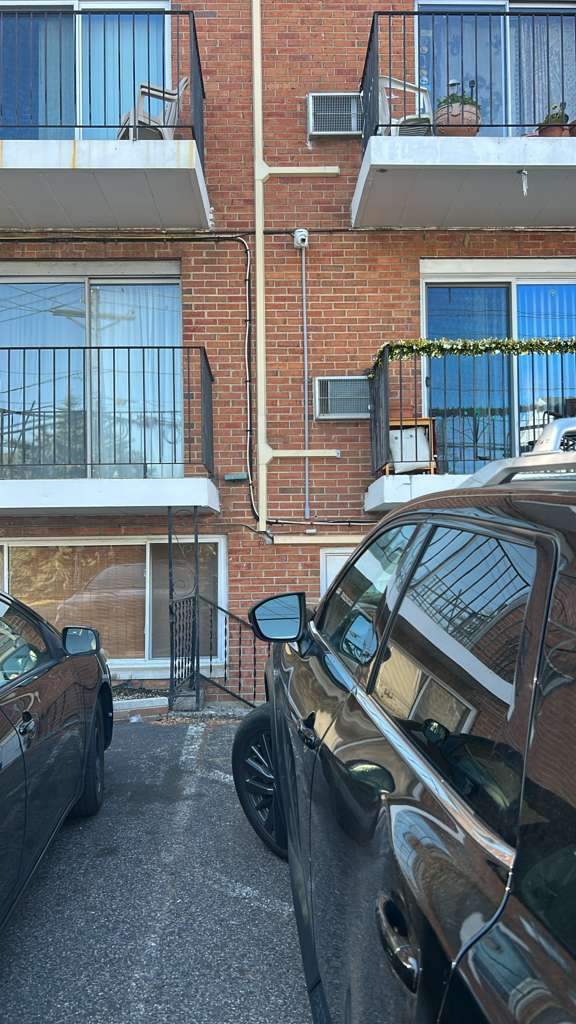
We replaced the full 8-camera analog system with modern 8MP / 4K IP cameras, re-running and properly securing cabling at every mounting point along the way, no more exposed splices, no more guesswork about what's connected where.
Inside, we built out a proper wall-mounted rack for the network switch, NVR, and UPS, organized, labeled, and easy to service the next time anyone needs to touch it.
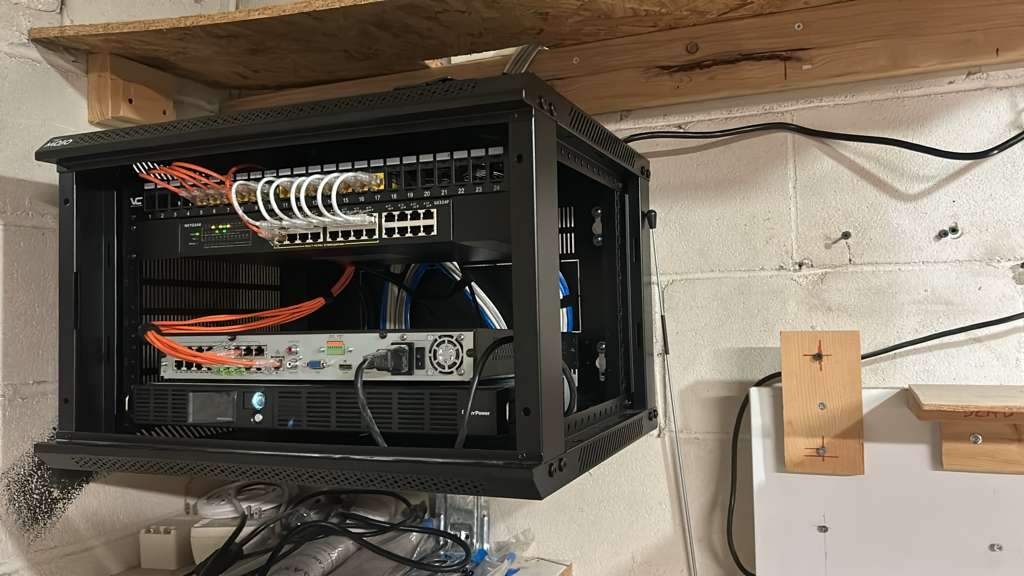
Then it gets locked up, a closed, secured enclosure so the equipment is protected from dust, tampering, and accidental disconnects, while still staying easy to access for maintenance.
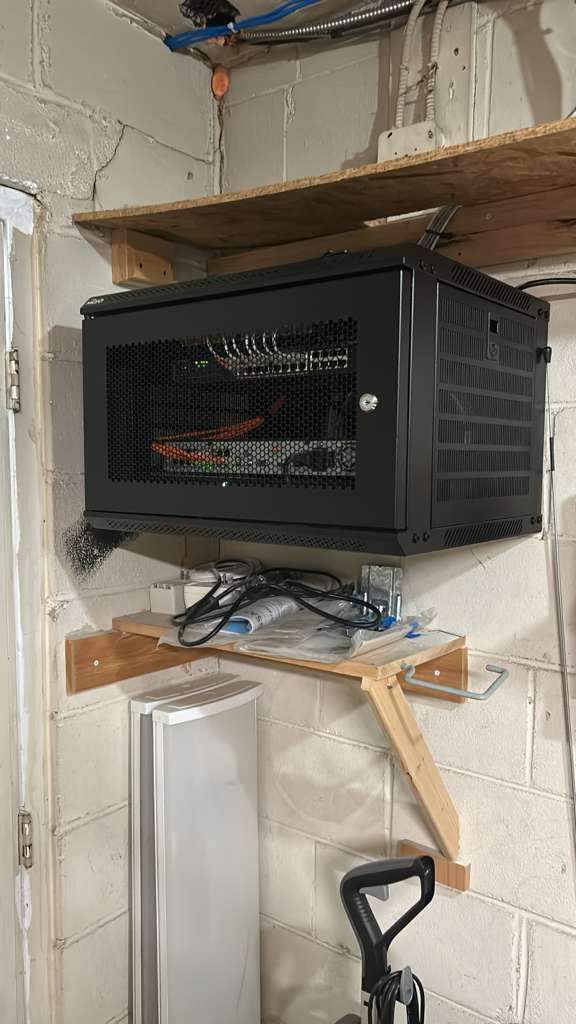
No more exposed splices, no more guesswork about what's connected where.
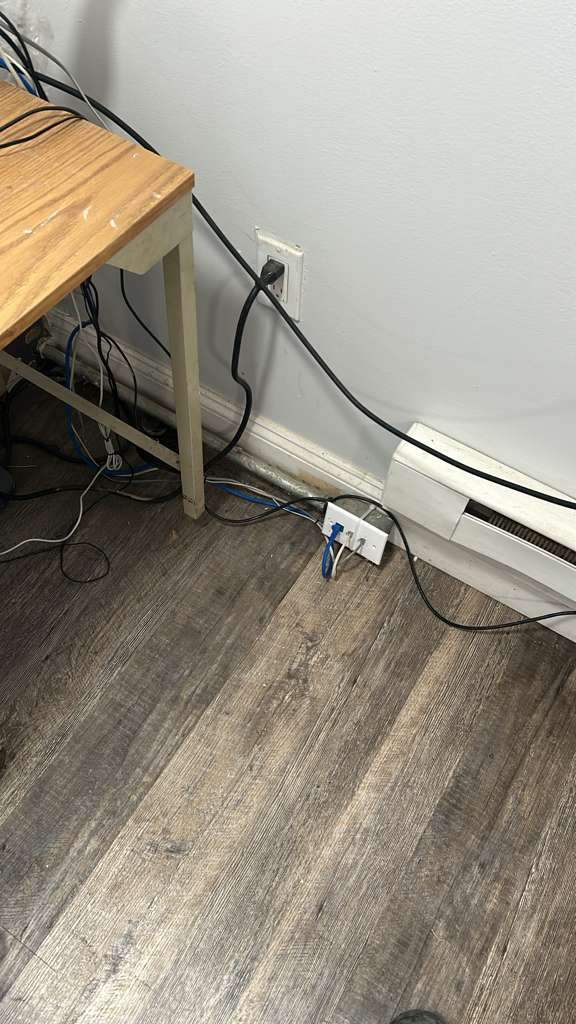
The office floor, after
Back in the management office, the same cables that were piled on the floor are now routed along the baseboard and secured, same equipment, same network, just organized instead of chaotic.
What it means for the property
The cameras are the visible win, sharper footage, better coverage, and equipment that's actually still supported. But the bigger win is underneath: a network closet and camera infrastructure that any technician, ours or otherwise, can walk into and immediately understand. That's what actually keeps a system reliable for the next five years, not just the first month.