
From Unmanaged Switches to a Network That Can Grow With You
Unmanaged switches, tangled cabling, and a cheap home router doing the job of business-grade equipment, here's what we found at one restaurant, and what we replaced it with.
This restaurant's network had grown the way a lot of small businesses' networks do: one piece at a time, under pressure, with whatever was on hand. A POS system needed a port, so a switch got added. Wi-Fi was spotty in the back, so a consumer router got plugged in somewhere convenient. None of it was planned, and none of it was meant to last, it just never got replaced.
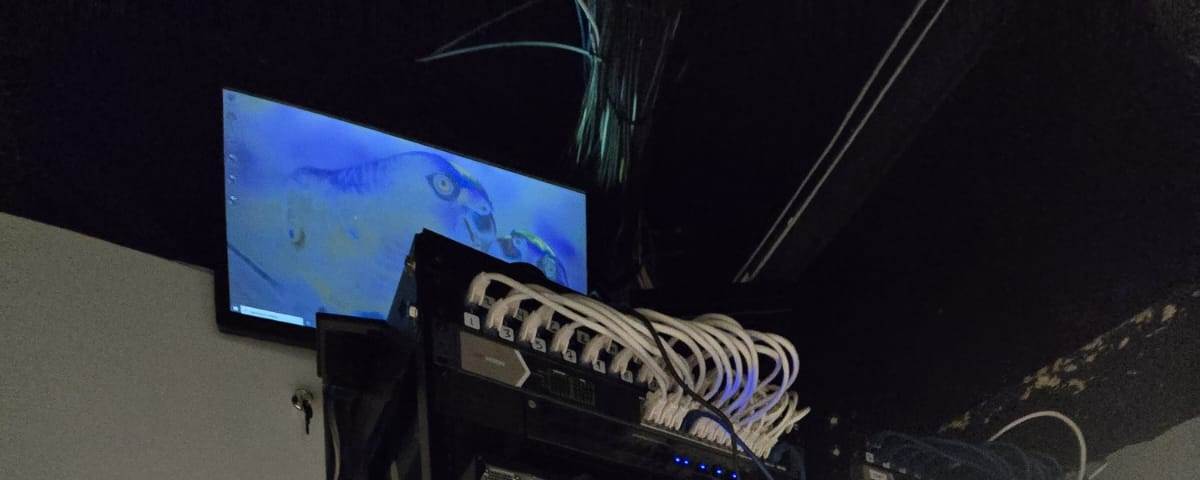
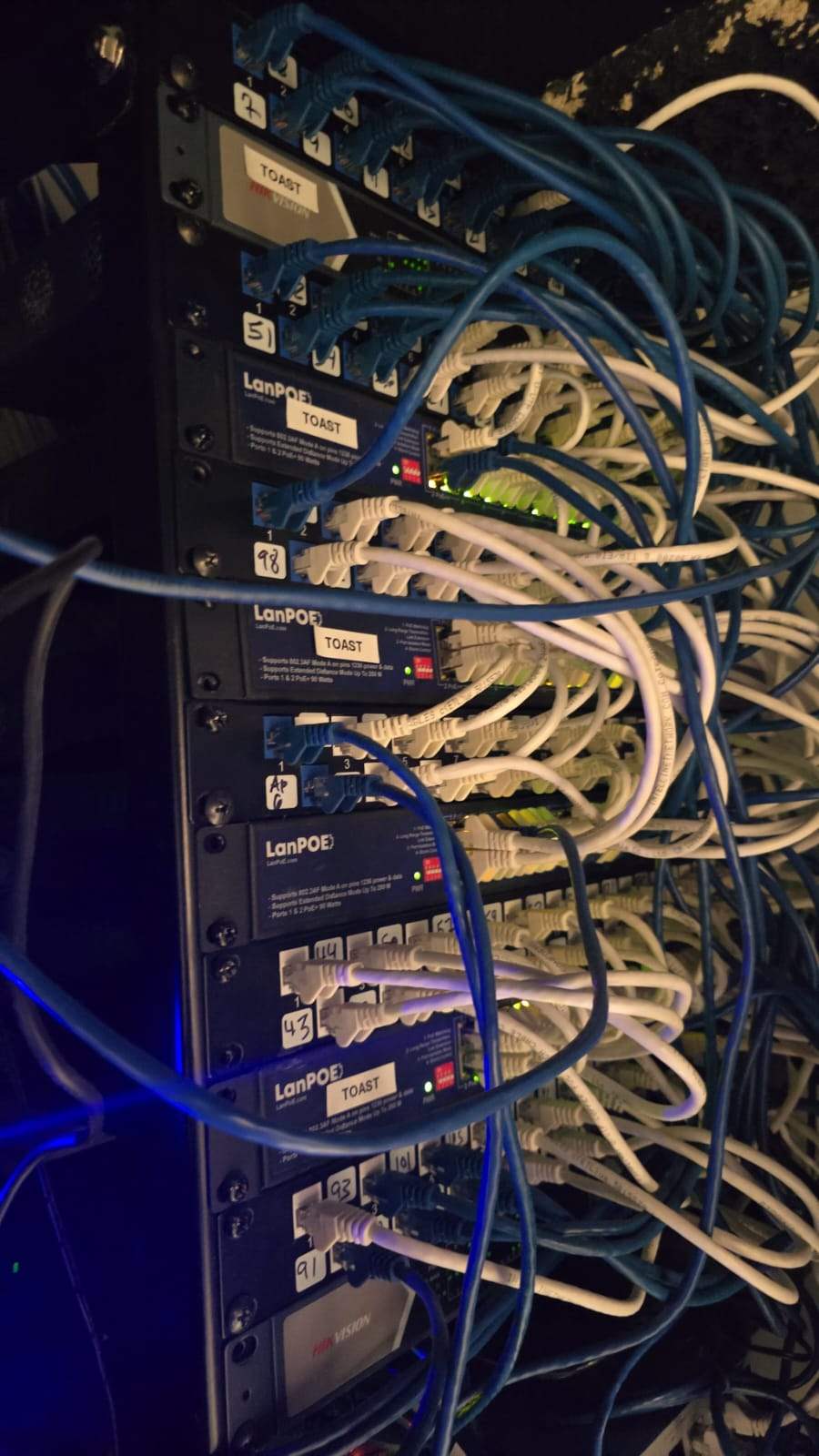
By the time we got involved, the equipment closet told the whole story. A stack of unmanaged switches, the kind meant for a home office, not a working kitchen, were daisy-chained together, each one feeding the next. Every port was full. Every cable was the same generic white or blue, with no labeling and no way to trace what fed what without unplugging things and watching for what broke.
Why this setup was a problem
Unmanaged switches have no way to prioritize traffic, no visibility into what's connected, and no way to isolate a problem device without physically unplugging things one at a time. Daisy-chaining several of them together compounds all of that, if one switch in the chain hiccups, everything downstream of it goes with it. And a consumer router, designed for a handful of devices in a house, simply isn't built to handle the device count and uptime demands of a restaurant running POS terminals, kitchen displays, payment processing, and guest wifi all day, every day.
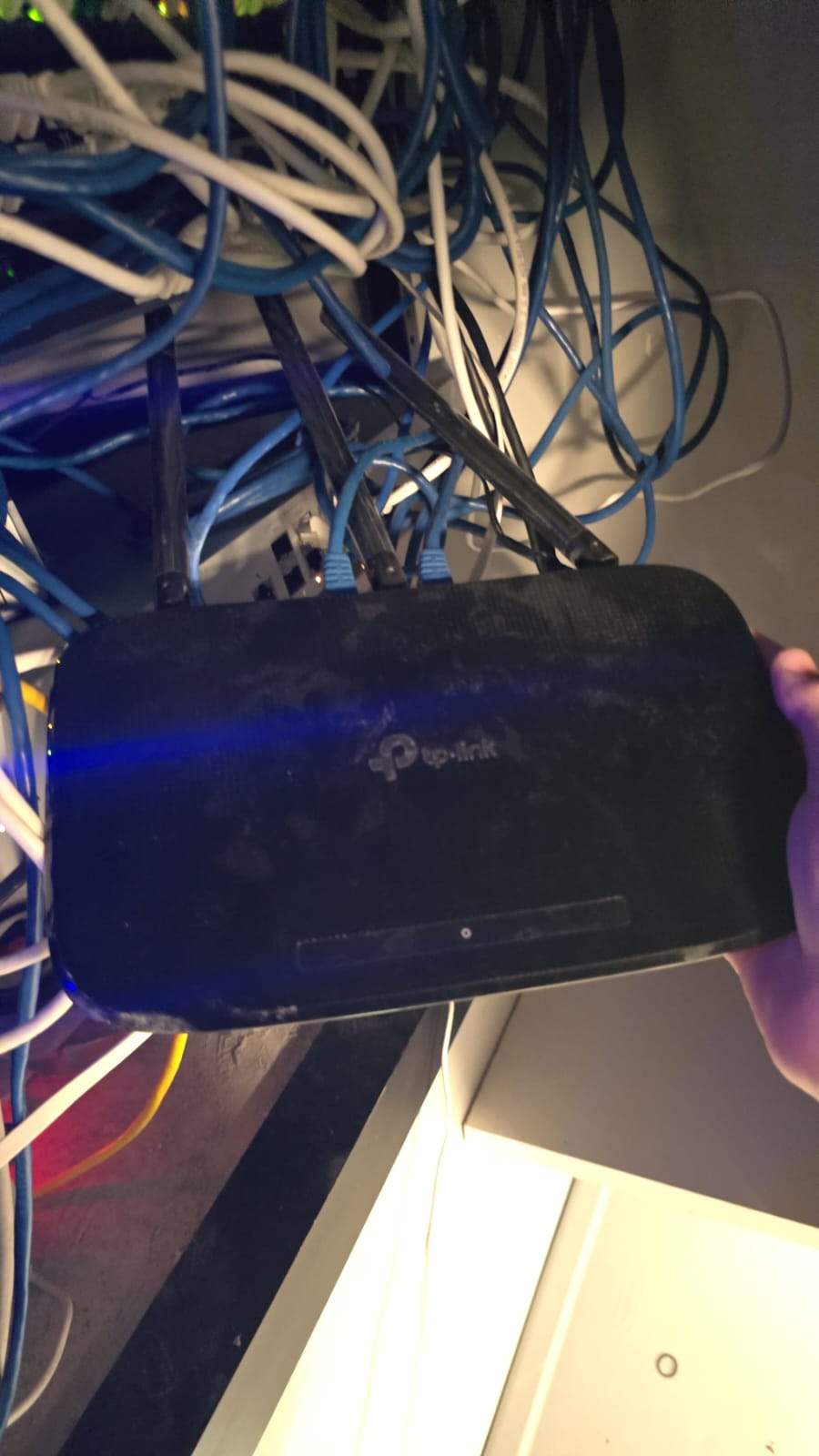
None of this is unusual for a business that's grown faster than its IT has. The problem is that this kind of setup doesn't fail gracefully, it fails unpredictably, usually at the worst possible time, like a Friday dinner rush when the credit card terminals suddenly can't reach the network.
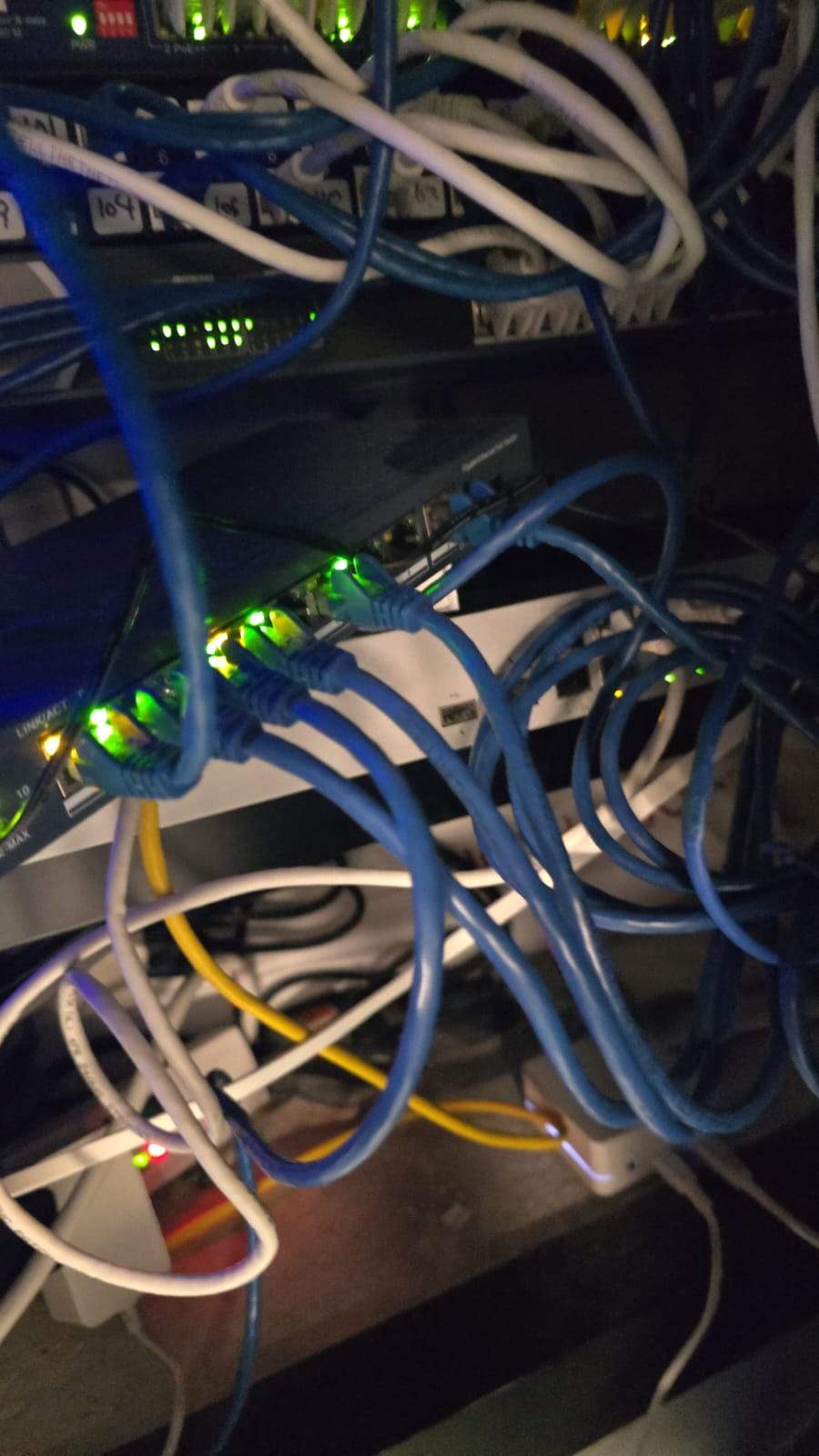
This kind of setup doesn't fail gracefully, it fails unpredictably, usually at the worst possible time.
What we put in its place
We replaced the unmanaged switch stack and consumer router with proper business-grade networking equipment: managed switches that can be monitored and configured remotely, dedicated wifi access points sized to the space, and cabling that's organized, labeled, and rack-mounted instead of looped around whatever hook happened to be nearby. The new setup has room to add devices as the business grows, instead of needing another switch jammed into the chain every time something new gets plugged in.
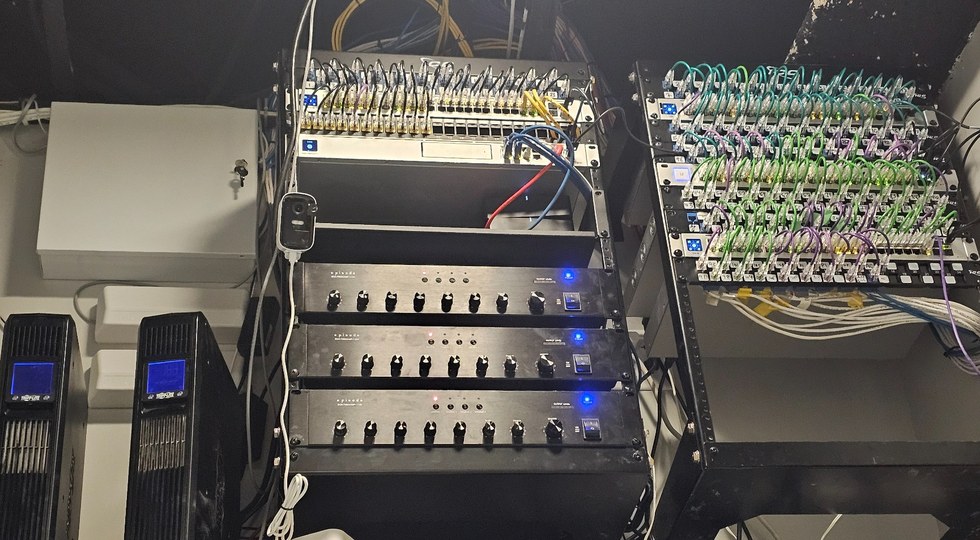
The difference isn't something staff notice day-to-day, that's the point. The wifi doesn't drop, the POS doesn't lose connection mid-order, and if something does need attention, we can see it and fix it remotely instead of someone tracing cables by hand. It's the same story behind a lot of our cleanup work: the goal isn't a flashier network, it's one that just works and can keep up as the business does.