
Cloud PBX, explained, and when it isn't the right fit.
A cloud-hosted PBX moves your phone system's brain off a closet server and into a data center, managed through a web portal instead of a maintenance contract. It's the right choice for most businesses today, but not automatically the right choice for every business, and we'll tell you honestly if yours is an exception.
What "Cloud PBX" actually means
A PBX (private branch exchange) is the system that routes calls inside your business, it's what lets you have extensions, transfer a call to a coworker, put someone on hold, or route an incoming call to the right department. Traditionally, that system lived on a physical box in a closet or server room, wired directly to your phone lines. A cloud PBX replaces that box with software running in a data center. Your desk phones, softphones, and mobile app all connect to it over the internet instead of over dedicated phone wiring, and every extension, call queue, and routing rule is configured through a web portal rather than a technician's proprietary programming tool.
The practical effect is that your phone system stops being a piece of hardware you own and starts being a service you subscribe to, similar to how email moved from an on-site Exchange server to Microsoft 365. Updates happen automatically. New features roll out without a technician visit. Adding a new employee's extension is a few clicks in a portal instead of running new cable to a new desk.
Cloud-hosted PBX vs. on-premises and hosted PBX systems
There are really three models worth understanding, and it's worth being straightforward about the tradeoffs of each rather than treating cloud as the only serious option. If you're at the very start of that decision, our guide on choosing a business phone system covers how call volume and front-desk workflow factor in before you get to the PBX-model question at all.
Cloud-hosted PBX runs entirely off-site in a provider's data center. There's no on-site hardware to maintain beyond your desk phones and network switches, so there's nothing in your server closet to fail, no maintenance contract renewal, and no aging equipment that eventually becomes unsupportable. It scales up or down easily, adding or removing a handful of extensions doesn't require new equipment. It's billed on a predictable subscription basis rather than a large upfront hardware purchase. The tradeoff is that it depends on your internet connection: if your internet goes down and you haven't set up failover, your phones go down with it (though this is solvable, as covered below).
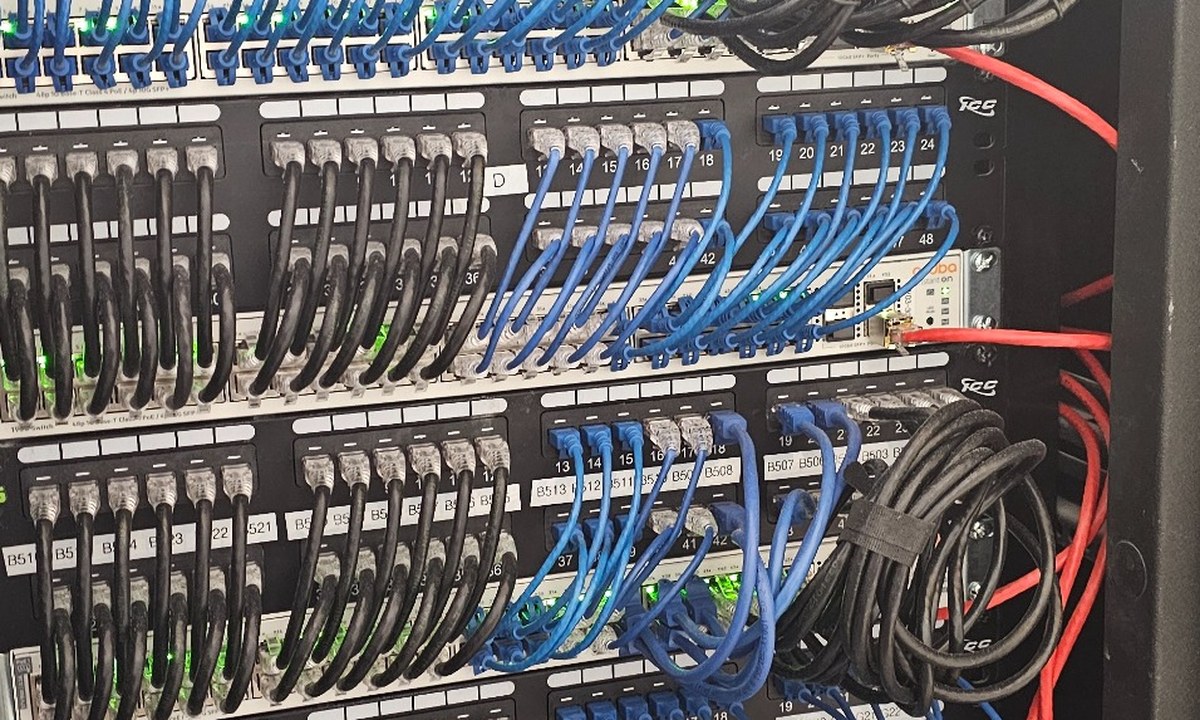
On-premises PBX keeps the physical system in your building. The core advantage is that internal calling between extensions in the building can, in some configurations, continue even during an internet outage, and some businesses simply prefer owning their equipment outright rather than paying an ongoing subscription. The tradeoffs are real too: a meaningful upfront hardware cost, an aging system that becomes harder to find parts and support for over time, and none of the built-in flexibility of a cloud system, adding a phone usually means running a cable, and features get added by a technician rather than a portal click.
Hosted PBX (sometimes used interchangeably with cloud PBX, though the distinction matters to some vendors) typically refers to a PBX system dedicated to your business but hosted and maintained by a provider rather than shared multi-tenant infrastructure. It sits between the two other models: less hardware to maintain than a fully on-premises system, but potentially more customization or dedicated capacity than a standard multi-tenant cloud PBX, usually at a higher cost than shared cloud hosting.
Why most businesses end up choosing cloud
For the large majority of businesses we work with, cloud PBX wins out, not because it's the trendy option, but because most businesses don't have a specific reason to prefer the alternatives. They want lower upfront costs, they want to add or remove staff without a truck roll, they want employees who work from home or from a job site to be reachable on the same office number, and they don't have a niche telephony requirement that only specialized on-premises equipment can satisfy. If your team is spread across locations, works remotely some of the time, or you simply don't want to own and maintain phone hardware, cloud PBX is generally the more practical choice.
When on-premises or hosted PBX might make more sense
There are legitimate reasons a business sticks with or chooses an on-premises or dedicated hosted system: a facility where internet outages are frequent and internal calling during an outage matters more than external calling, a specific integration with legacy equipment that only works with a particular on-premises platform, an organization with strict internal policies about where systems are physically located and who has access to them, or simply a preference for a one-time capital purchase over a recurring subscription. None of these are wrong reasons, they're just different priorities than what most small and mid-sized businesses have.
What we won't do is tell you cloud is right for you before we understand your business. Part of a proper VoIP assessment is asking what actually matters to you, cost predictability, remote flexibility, internet outage resilience, or a specific compliance or telephony requirement, and matching the system to those answers instead of a one-size-fits-all recommendation.
Internet outages don't have to mean lost calls
The biggest objection to cloud PBX is "what happens when the internet goes down." It's a fair question, and the answer is that it's a solvable problem, not a fatal flaw. We configure automatic call failover so that if your primary internet connection drops, incoming calls redirect to cell phones, another location, or a backup number you choose, so callers still reach someone even during an outage. For businesses where any downtime is unacceptable, we can also discuss a secondary internet connection or cellular backup that keeps the whole system online, not just the phones.
How we handle the transition
Moving to a cloud PBX doesn't mean starting from scratch. We map your current extensions, call flows, and existing phone numbers, then configure the new system to match, or improve on, how your business already operates before we ever cut over. Number porting happens in parallel so there's no gap in service, and we test call routing and quality on your actual network before go-live, not after.
Keep reading.
Get an honest read on cloud vs. on-premises.
We'll look at how your business actually operates and tell you plainly whether cloud PBX, hosted PBX, or keeping something on-site makes the most sense, no pressure toward whichever is easiest for us to sell.