
How we use Ubiquiti UniFi, and why it's our default for small-business networks.
UniFi is the platform we reach for on most networking jobs: switches, access points, gateways, and cameras managed from one console. Here's where it fits in our stack, where it excels, and where we choose something else.
Where we use it
Ubiquiti's UniFi line is what we deploy for most small-business networking: managed switches, Wi-Fi access points, gateways, and, through UniFi Protect, camera systems. When we design a network for a typical office, retail space, restaurant, or warehouse, UniFi is usually the starting point. It covers the whole layer from the internet handoff down to the wireless devices in your staff's hands, and it does it with hardware that has held up well across years of our deployments.
That breadth matters more than any single spec. A network built entirely on one platform means the switch knows about the access points, the gateway knows about both, and when something misbehaves we're troubleshooting one system instead of three vendors pointing fingers at each other.
Where it shines
The single management console is the headline. Every UniFi device on a client's network, wired, wireless, and cameras, appears in one dashboard we can reach securely from our office. When a client calls about slow Wi-Fi in the back room, we can see which access point they're on, what the signal looks like, and what else is competing for airtime before anyone drives anywhere.
There's no per-device licensing. Once the hardware is purchased, there's no recurring fee just to keep managing it, a real difference from most enterprise networking lines, and one reason UniFi is such strong value for small businesses. The value story holds up at purchase time too: business-grade features at a price point that doesn't force compromises elsewhere in the project.
It also scales cleanly. A five-person office with one access point and a thirty-person office with six run on the same platform, the same console, and the same configuration approach. When a client grows, we add hardware, we don't rip and replace. That's exactly what made it the right fit for projects like our restaurant build-out, where Wi-Fi, cameras, and wired drops all needed to come online together.
Where it may not fit
UniFi isn't the answer for everything, and we don't pretend otherwise. Some environments require certified deep-packet inspection or specific compliance-mandated firewall features, certain healthcare, finance-adjacent, and regulated settings. In those cases we pair UniFi switching and Wi-Fi with a dedicated security appliance, or use a different firewall entirely. Our SonicWall page covers when we make that call.
Very large enterprise environments, hundreds of access points, complex multi-site routing, dedicated network operations teams, are also outside where we'd position UniFi. That's not most of our clients, but it's worth being honest about the ceiling.
How we deploy it
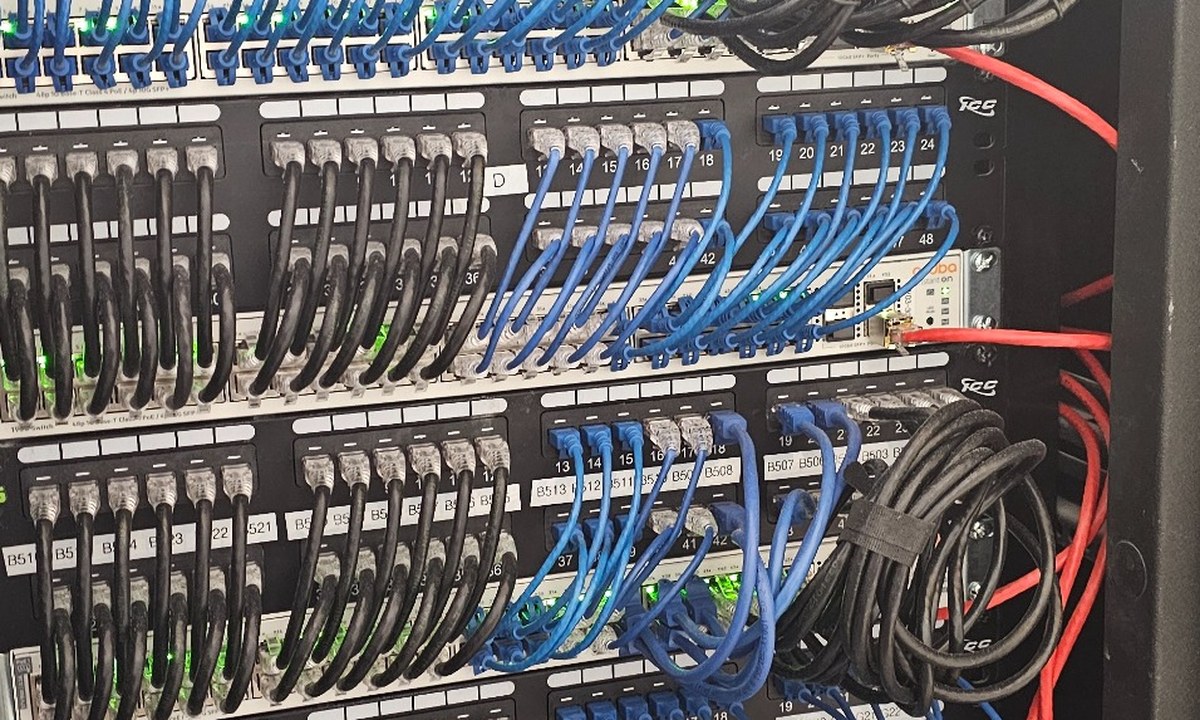
The hardware is only half the job. Every UniFi network we build is properly segmented with VLANs, guest Wi-Fi never touches business systems, cameras and phones live on their own networks, and point-of-sale traffic is isolated where it needs to be. A UniFi network with everything on one flat LAN is a missed opportunity, and we see plenty of those when we take over networks other people installed.
Every deployment is monitored through our tools, so we typically know about a failing access point or a flapping switch port before the client does. And everything is documented, port maps, VLAN assignments, credentials, and topology, so the network is maintainable by design, not tribal knowledge.
Keep exploring.
Get a network designed around your business, not a parts list.
Whether it's a new build-out or fixing a network that's never worked right, we'll tell you what fits your situation, UniFi or otherwise, and why.